Article written by Elisa
This article may contain compensated links. Please read disclaimer for more info.
All About the Regions of France
France mainland has 13 regions and choosing the wrong one for your travel style can mean missing the best the country has to offer. I’ve traveled every single one of them, by train, by car, and on foot, and as a French local I’ll help you cut through the noise and find the region that actually matches what you’re looking for.
This is not a generic overview. Whether you’re dreaming of Provence’s lavender fields, Burgundy’s wine cellars, Brittany’s wild coastline, or Alsace’s fairytale villages, this guide is for the discerning traveler who wants honest descriptions, practical maps, and real local recommendations – including the road trips I’d take if I were visiting each region for the first time.
Last update: April 2026
Table of Contents
- Which Region of France Is Right for Your Trip?
- Map of France with Regions
- List of French Regions
- Tourist Map of France with Cities
- Regions of France – Complete Guide
Plan your dream trip to France, step by step, with my France Trip Planner.
Which Region of France Is Right for Your Trip?
– Wine lovers: Burgundy (Bourgogne-Franche-Comté), Alsace (Grand Est), Loire Valley (Centre-Val de Loire), Bordeaux (Nouvelle-Aquitaine)
– History & architecture: Normandy (Normandie), Loire Valley (Centre-Val de Loire), Alsace (Grand Est)
– Beaches & Mediterranean Life: French Riviera (Provence-Alpes-Côte d’Azur), Occitanie, Corsica (Corse)
– Nature & Outdoors: French Alps (Auvergne-Rhône-Alpes), Brittany (Bretagne), Pyrénées (Occitanie and Nouvelle-Aquitaine)
– First Trip Beyond Paris: Provence (Provence-Alpes-Côte d’Azur), Normandy (Normandie), Loire Valley (Centre-Val de Loire)
Map of France with Regions
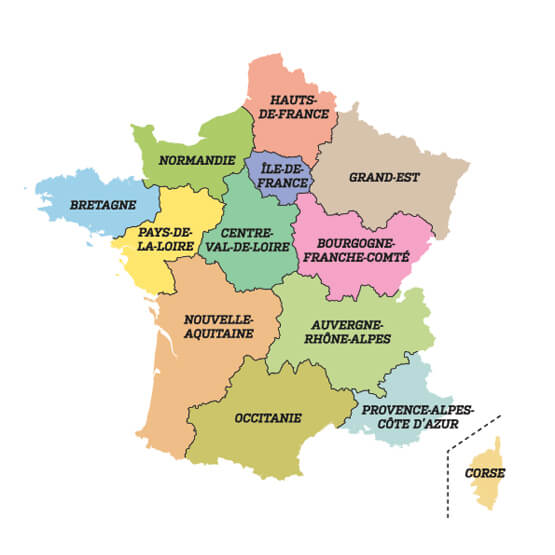
The map of France regions above shows the regions of mainland France and the island of Corsica.
This regions of France map does not include France’s overseas regions, which are located in the Caribbean Sea, the Indian Ocean, and the Pacific Ocean. These regions will be covered in a separate article about the French Overseas Territories.
List of French Regions
Since January 2016, France has been organized into 18 regions: 13 in Metropolitan France (Europe) and 5 Overseas. While some French regions, such as Île-de-France, remain unchanged, other regions like Alsace, Champagne, and Bourgogne have been combined into larger regions, including Grand Est and Bourgogne-Franche-Comté.
The French regions are then divided into departments, which are administrative areas of France. There are 95 departments located in France Mainland, 2 in Corsica, and 5 departments Overseas. Next to the department names, I have included its department number (e.g., Ain (01)).
Tourist Map of France with Cities

This colorful France tourist map comes with the names of the main cities in France and some of France’s main attractions (under the form of drawings) by region. On this France travel map, you can also see the main rivers in France: Seine, Loire, Garonne, Rhône, Charente, and Ill.
What are the best regions of France to Visit?
Rather than focusing on the “best regions”, I prefer to highlight the most popular areas of France to visit, since French regions are primarily administrative divisions. Some of these areas align with French departments or regions, while others reflect historical regions, each with its own unique culture, landscapes, and charm.
The French Riviera (Côte d’Azur in French) is known particularly for glamour and glitz and is a picturesque stretch of coastline with stunning beaches and pretty villages. This luxury destination in Southern France includes St. Tropez, Nice, Cannes, and the Principality of Monaco.
Loire Valley: known as the Garden of France, this central region of France bisected by the Loire River is renowned for the Château de Chambord and other Renaissance Castles, incredible wine, as well as historic towns like Tours, Blois, and Amboise.
Normandy: this region in Northern France is home to the stunning island abbey of Mont Saint-Michel, Monet’s House and Gardens in Giverny, and many World War II sites. History abounds in the vibrant, cultural capital, Rouen – the Old Town is the best-preserved medieval center in France, and the Episcopal Palace is where Joan of Arc was tried and convicted.
Alsace: the culturally unique and historical region of Eastern France borders Germany and Switzerland and is filled with fairytale towns, chocolate-box villages, and magical Christmas markets. Alsatian wines are as exclusive and undiscovered by foreign visitors as the region.
Provence: from the glorious lavender fields to the UNESCO World Heritage walled city of Avignon, here you’ll find Roman history, stunning hilltop villages and landscapes that inspired Cezanne.
Regions of France – Complete Guide
The regions in France are wonderfully diverse, each offering its own unique experiences: rich culture and heritage, time-honored traditions and gastronomic delights, sparkling coastlines or majestic mountains, bustling cities or tranquil countryside. So pack your bags and let’s explore France’s regions and discover their most unforgettable attractions.
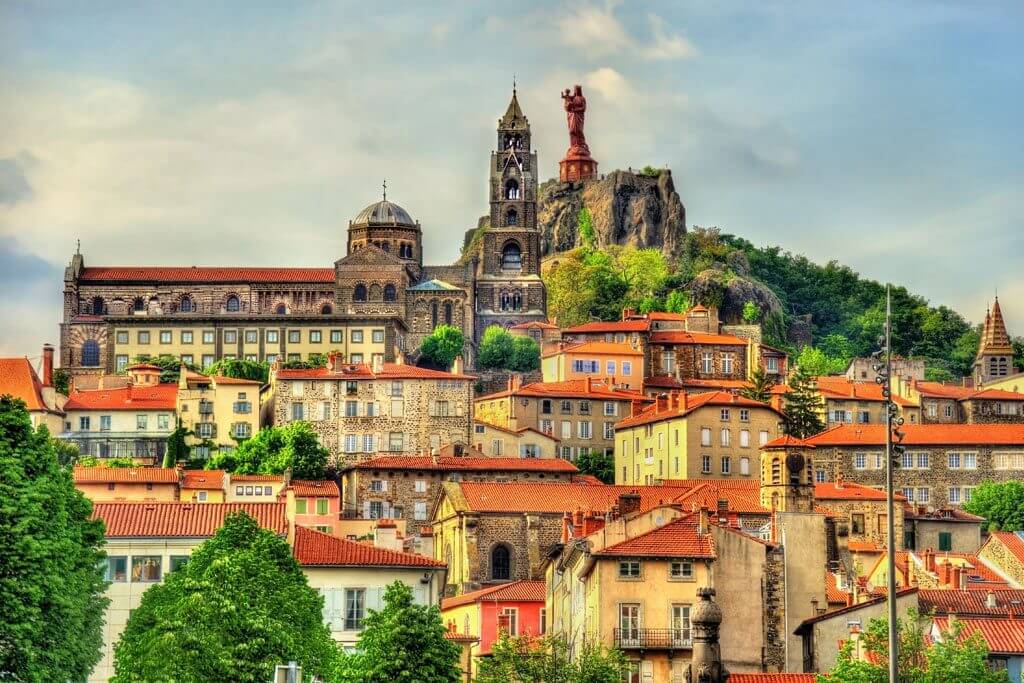
- Best for: mountains, skiing, Lyon gastronomy
- Best season: winter for skiing, summer for hiking
- Elisa’s pick: Lyon feels like my second home! If you can, try to visit during the Festival of Lights in December – it’s truly magical. I also loved hiking up the Puy de Dôme volcano.
It’s impossible not to love the Auvergne-Rhône-Alpes region in Eastern France. Auvergne-Rhône-Alpes is one of the most varied regions in France, offering a wide range of different destinations to satisfy every traveler. This new region includes the pre-2016 regions of Auvergne and Rhône-Alpes. The capital city of the Auvergne-Rhône-Alpes region is Lyon.
Auvergne is the land of volcanoes and hot spas but also the land of beautiful Romanesque churches and good cheese.
Rhône-Alpes is home to picturesque stone-built villages frozen in time. It is also the region of two of France’s most beautiful cities, Lyon and Annecy, and the snowy peaks of the French Alps.
Protected natural reserves, nearly a hundred volcanoes, scenic walking trails, Romanesque churches, and more than 20,000 kilometers of waterways—this and so much more await you in this blessed land. What are you waiting for to explore this remarkable corner of France?
Auvergne-Rhône-Alpes is divided into thirteen departments: Ain (01), Allier (03), Ardèche (07), Cantal (15), Drôme (26), Isère (38), Loire (42), Haute-Loire (43), Puy-de-Dôme (63), Rhône (69D), Métropole de Lyon (69M), Savoie (73), Haute-Savoie (74). The main cities in the region are Lyon, Grenoble, Saint-Etienne, Chambéry, Valence, Annecy, and Clermont-Ferrand.
Bourgogne-Franche Comté
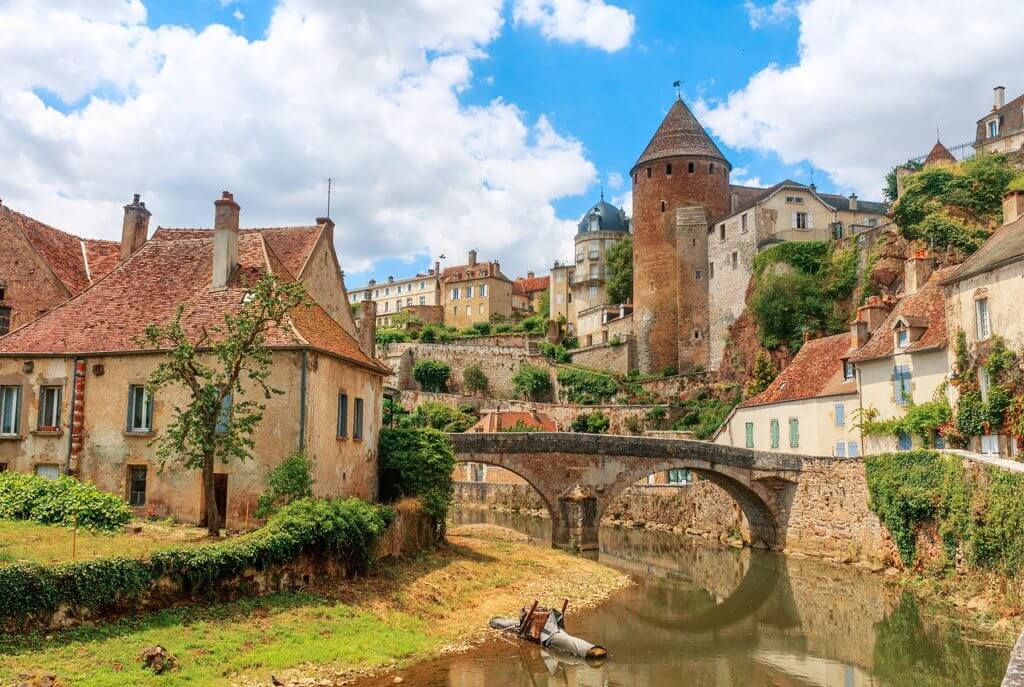
Explore Bourgogne-Franche-Comté by Car:
- Best for: wine, cycling, medieval towns
- Best season: September – October for harvest
- Elisa’s pick: Beaune is a charming town and an excellent base for exploring the Burgundy wine region, as well as the surrounding Romanesque abbeys.
Bourgogne-Franche-Comté is the land of world-famous wines, picturesque small towns, and snails. This new French region comprises the former regions of Bourgogne (Burgundy) and Franche-Comté. The capital city of the Bourgogne-Franche Comté region is Dijon.
The former region of Bourgogne is famous for its Romanesque heritage, some of the best vineyards of France, good gastronomy, beautiful Rennaissance and Medieval castles, and river tourism. Actually, Bourgogne has the largest network of inland waterways in France!
Franche-Comté, conversely, is well known for its diverse landscapes and large open spaces thanks to the wealth of the Vosges Massif, the Jura Mountains, and its many lakes and forests.
Bourgogne-Franche Comté is definitely an excellent combination of heritage + gastronomy, and nature at its best!
The region of Bourgogne-Franche-Comté is divided into eight departments: Côte-d’Or (21), Doubs (25), Jura (39), Nièvre (58), Haute-Saône (70), Saône-et-Loire (71), Yonne (89), Territoire de Belfort (90). The main cities in the region are Dijon, Besançon, Montbéliard, and Belfort.
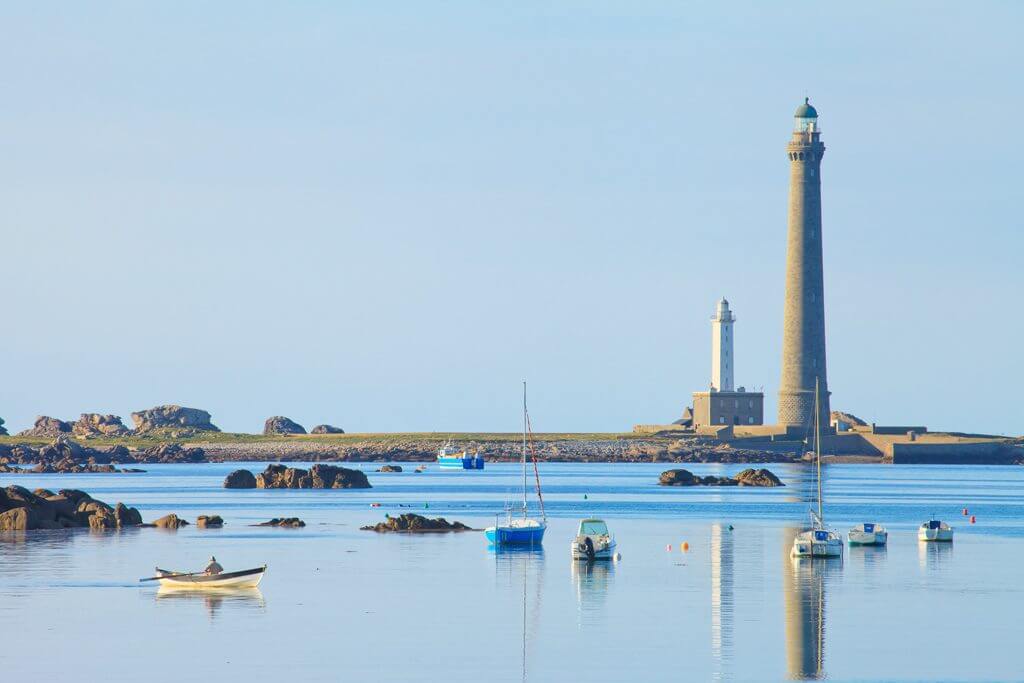
- Best for: wild coastline, seafood, Celtic culture
- Best season: June to September
- Elisa’s pick: the GR34 (coastal, multi-day hike). Try to walk at least one section; the landscape is amazing! The Gulf of Morbihan is lovely and an excellent place to explore the Carnac Alignments.
I must admit that I have a crush on Bretagne; this region is so varied and beautiful!
The westernmost region of France is a region of tradition, character, Celtic roots, and legends. It is a land of wild and unique landscapes, from rocky coastlines and cliffs to moorland and medieval towns. The capital city of the Bretagne region is Rennes.
But of course, there is much more! Brittany is also a land of sailors, isolated lighthouses, oysters, fantastic coastal walks, and mysterious prehistoric alignments. Brittany is magical, culture, crêpes & cider, traditional festivals, and, most of all, true nature.
Brittany is divided into four departments: Côtes-d’Armor (22), Finistère (29), Ille-et-Vilaine (35), and Morbihan (56). The main cities in the region are Rennes, Brest, and Quimper.
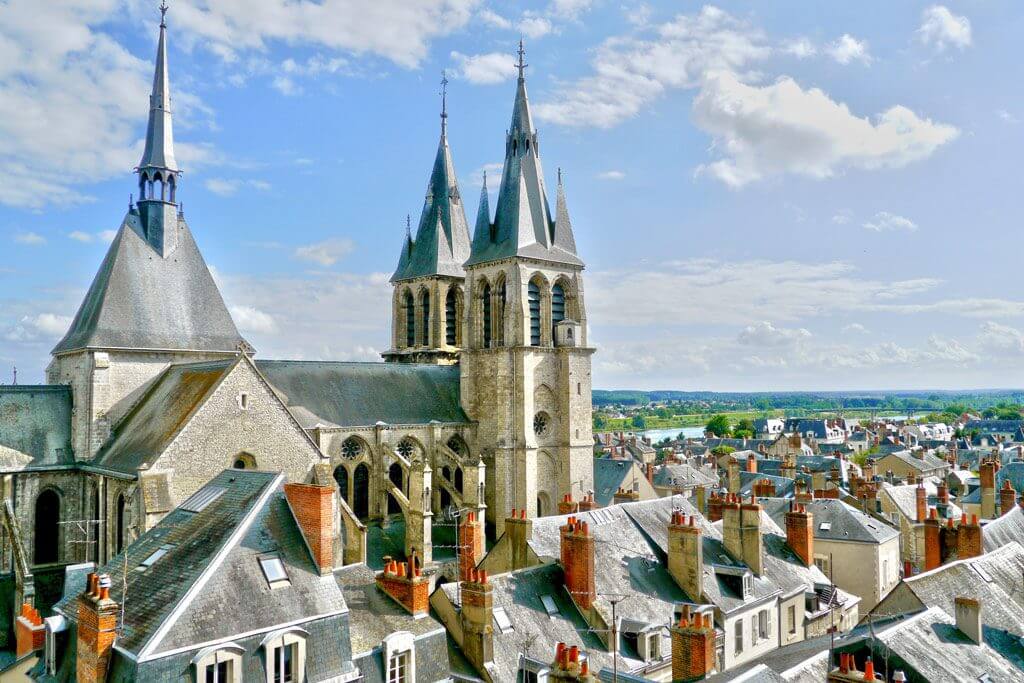
- Best for: châteaux, Loire wine, cycling
- Best season: May to June, September
- Elisa’s pick: Don’t miss the historical cities and towns of Blois, Chinon, and Tours. Wine-tasting in the Touraine wine region.
The region of Centre-Val de Loire gets its name from the Loire River, the longest river in France. Irrigated by the Loire and its many tributaries, this beautiful French region produces excellent wines perfectly complemented with savorous regional food. The capital city of the Centre-Val de Loire region is Orléans.
Beloved by Kings, Queens, and artists, the Loire Valley is also the cradle of the Renaissance in France and is world-famous thanks to its amazing Loire Valley castles and the remarkable gardens that line the river. The Loire Valley Castles are today one of the most popular tourist attractions in France.
Centre-Val de Loire is also one of the regions of France that attracts large numbers of bike tourists: it sees more than 1 million bikers per year! Indeed, La Loire à Vélo (the Loire by bike) is perhaps the best way to explore this beautiful region.
The region of Centre-Val-de-Loire is divided into six departments: Cher (18), Eure-et-Loir (28), Indre (36), Indre-et-Loire (37), Loir-et-Cher (41), and Loiret (45). The main cities in the region are Tours, Orléans, and Bourges.
Corse (Corsica Island)
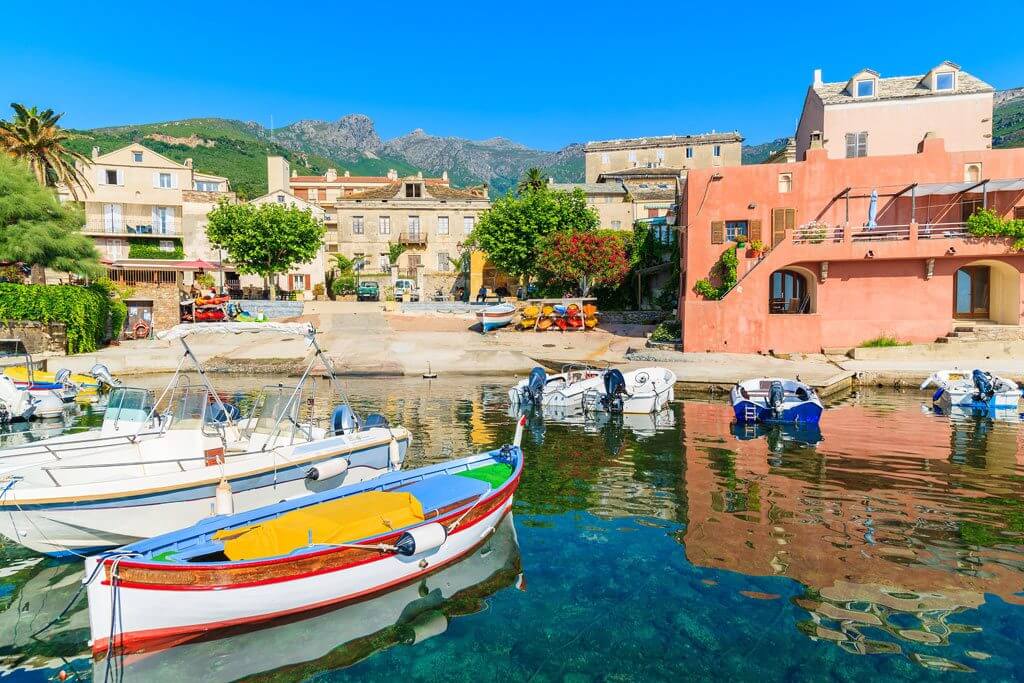
- Best for: beaches, hiking, unspoiled nature
- Best season: May-June, September
- Elisa’s pick: Calvi Citadel is very impressive and the Calanques de Piana are a dream.
The island region of Corse (Corsica) is located on the Mediterranean Sea in Southern France. Corsica’s capital is the city of Ajaccio.
Lying 200 kilometers from the French Riviera, the homeland of Napoléon Bonaparte is one of the most beautiful French Islands, a mini-continent with hilltop villages and hiking trails, beaches, and idyllic turquoise waters.
Corsica is far away, but don’t hesitate to discover the extraordinary landscapes of this beautiful island! Corsica is best explored by car.
Corsica is divided into two departments: Corse-du-Sud (2A) and Haute-Corse (2B).
Grand Est
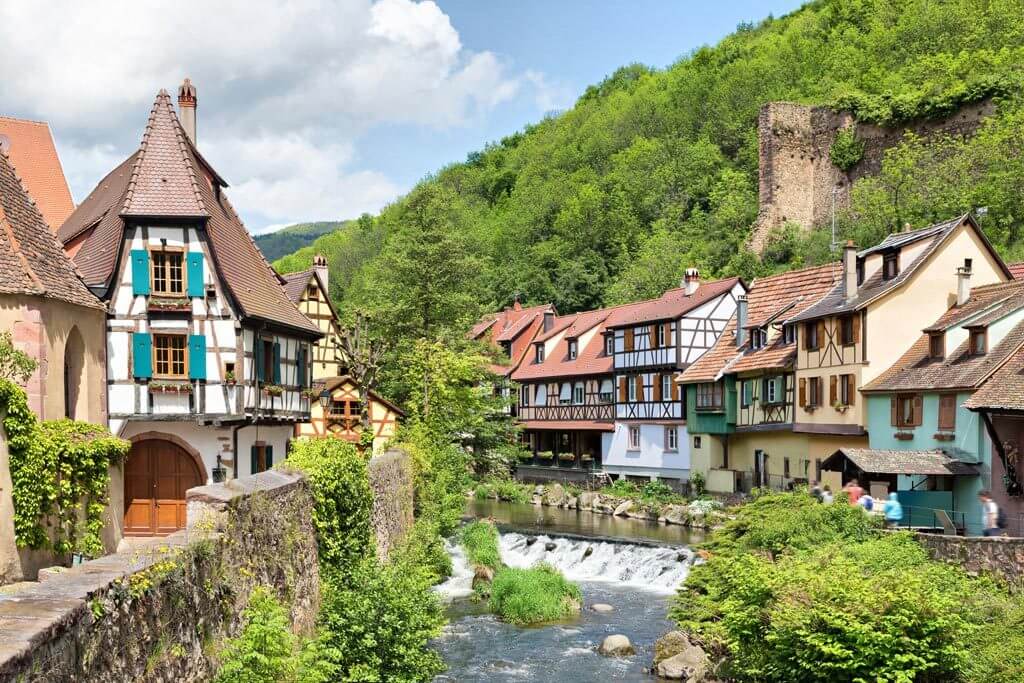
Explore Grand Est by Car:
- Best for: Wine, Christmas markets, WWI history
- Best season: December for markets, June and September – October for wine
- Elisa’s pick: Alsace Wine Route, the villages of Alsace, Strasbourg, Champagne’s vineyards
In Eastern France, Grand Est incorporates the former French regions of Alsace, Champagne-Ardennes, and Lorraine. The capital city of the Grand Est region is Strasbourg.
Alsace is a land between the Germanic and Latin worlds, a mosaic of hills, mountains, and plains dotted with castles, vineyards, and picturesque villages. The Alsace Christmas Markets are some of the best Christmas Markets in France!
Champagne, on the other hand, is best known for its bubbles and historical cities like Reims and Troyes. Last but not least, Lorraine is world-known for its quiche, madeleines, and mirabelle plum.
Bordering Belgium, Germany, Luxembourg, and Switzerland, Grand Est is a place with many tourist attractions. It is also a land of memory, and it was the theater of some of the most important battles of WWI. In Grand Est, you are never far from the forest: the Vosges and the Regional Parks of Ardennes and Lorraine.
Grand Est is divided into ten departments: Ardennes (08), Aube (10), Marne (51), Haute-Marne (52), Meurthe-et-Moselle (54), Meuse (55), Moselle (57), Bas-Rhin (67), Haut-Rhin (68), and Vosges (88). The main cities in Grand Est are Strasbourg, Metz, Nancy, Reims, Mulhouse, and Colmar.
Hauts-de-France
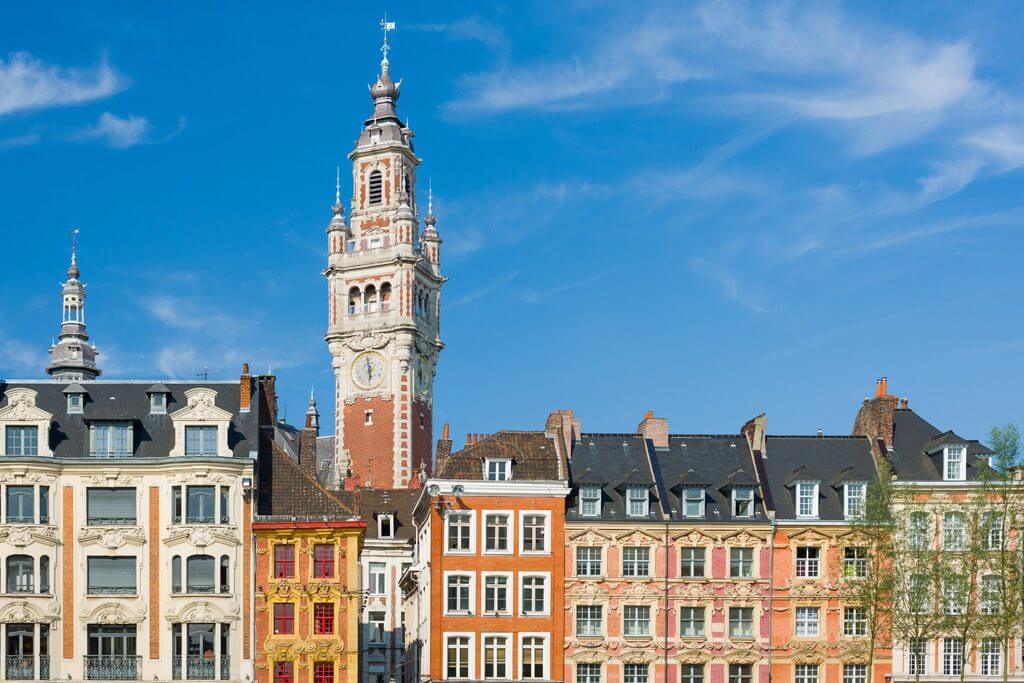
Explore Hauts-de-France by Car:
- Best for: Gothic cathedrals, Flemish art, wild landscapes
- Best season: April to September
- Elisa’s pick: Somme Bay & WW1 battlefields; don’t miss Amiens, its cathedral and unique hortillonnages (floating gardens).
Hauts-de-France is one of the lesser-known regions of France. And it’s a pity because it is located just a stone’s throw from Paris. Stretching from the northern suburbs of the capital all the way to the English Channel coastline, this region was formed in 2016 by merging the former Nord-Pas-de-Calais and Picardie regions.The capital city of the Hauts-de-France region is Lille, a vibrant city full of history, culture, and charm.
The Hauts-de-France region is full of stunning cathedrals, historic belfries, and impressive citadels, while its plains tell the story of its mining past. It’s also home to charming Channel beach resorts and relaxing seaside escapes along the Opal Coast.
Don’t miss beautiful Lille, with its Lille Stock Exchange, and Notre Dame d’Amiens Cathedral, one of France’s Grandes Cathédrales and home to the tallest nave in the country.
Hauts-de-France is divided into five departments: Aisne (02), Nord (59), Oise (60), Pas-de-Calais (62), and Somme (80). The main cities in Hauts-de-France are Lille, Amiens, Roubaix, and the port cities of Dunkerque (Dunkirk) and Calais.
Ile-de-France
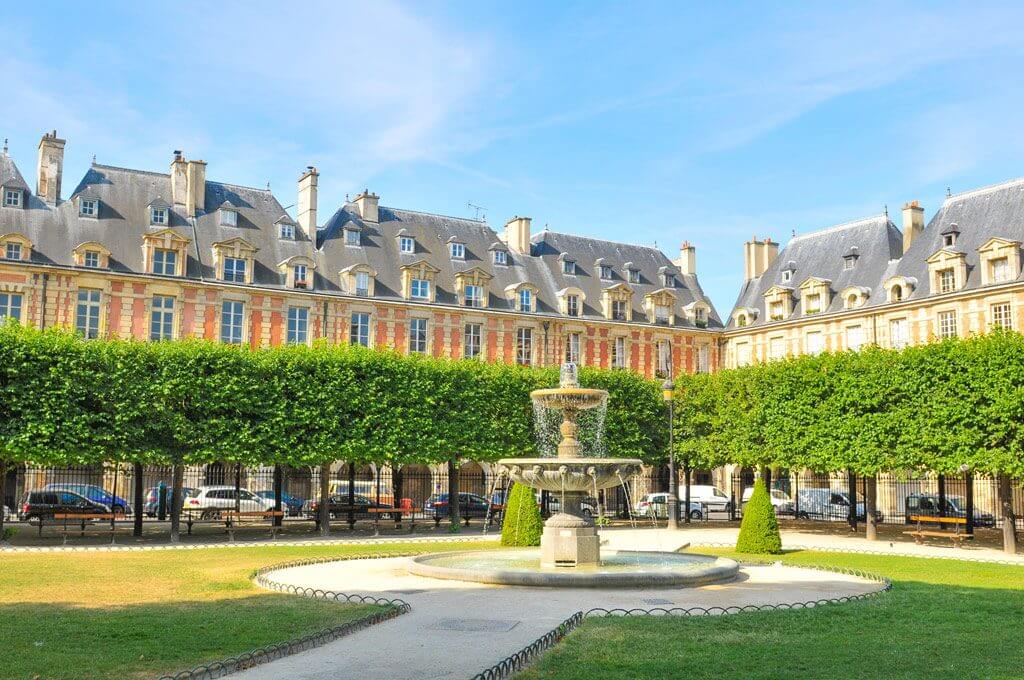
- Best for: Versailles, Fontainebleau, day trips from Paris
- Best season: spring and fall
- Elisa’s pick: small towns near Paris, the Basilica of Saint-Denis, and Versailles beyond the Château
Unlike its neighbor, the Hauts-de-France, Ile-de-France is one of the most visited regions of France, mainly thanks to Paris. Its name means “Island of France” because, in Medieval times, the French Kingdom was not much bigger than this region.
After visiting the top sites in Paris, venture beyond the Boulevard Périphérique to explore what Ile-de-France has to offer. Some attractions like the Palace of Versailles and Disneyland Paris are famous worldwide, but there’s so much more to discover in Ile-de-France.
Visitors can enjoy nature and relaxation in one of the four regional natural parks, while history buffs can learn about the Kings and Queens of France in amazing historical sites such as Château de Fontainebleau and Saint-Denis Basilica-Cathedral.
Picturesque villages are never far from the capital, and places like Auvers-Sur-Oise and Bougival were immortalized by Van Gogh, Renoir, and the Impressionists.
Ile-de-France is divided into eight departments: Paris (75), Seine-et-Marne (77), Yvelines (78), Essonne (91), Hauts-de-Seine (92), Seine-Saint-Denis (93), Val-de-Marne (94), Val-d’Oise (95). The main cities in Ile-de-France are Paris, Boulogne-Billancourt, Saint-Denis, and Versailles.
Normandie (Normandy)
Explore Normandy by Car:
- Best for: history, Impressionism, and cheese
- Best season: May to September
- Elisa’s pick: Mont Saint-Michel, the Bayeux Tapestry, D-Day Landing Sites, and the Cider Route.
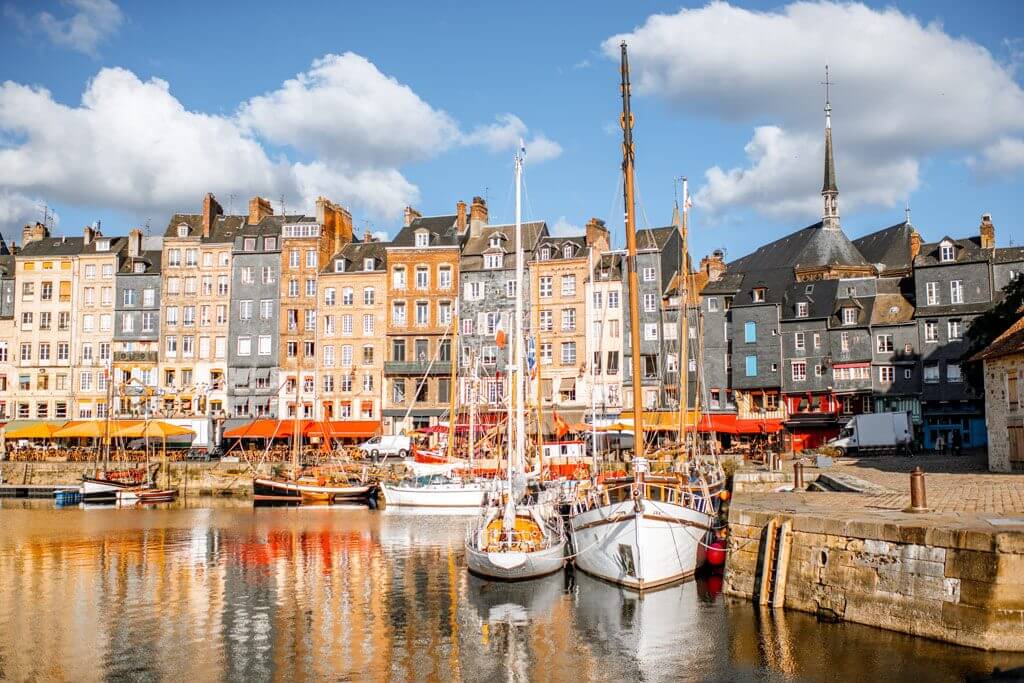
Normandy, in Northern France, is one of the most popular regions on the tourist map of France. And for a reason! Normandy offers the visitor a stunning coastline, picturesque villages, and idyllic countryside. Normandy is also famous for its rich history, tower bells, cows, and cheese. The capital city of Normandy is Caen.
Normandy is a popular weekend getaway from Paris, and many hotels and restaurants thrive along the Normandy coast, especially around the towns of Deauville and Honfleur.
Normandy is also a land of medieval towns, fabulous castles, and artists. The Impressionist movement was born in Normandy, inspired by Monet’s “Impression” of the sunrise at Le Havre. Monet’s Gardens in Giverny is an easy day trip from Paris.
Normandy is divided into five departments: Calvados (14), Eure (27), Manche (50), Orne (61), and Seine-Maritime (76). Normandy’s main cities are Le Havre, Caen, and Rouen.
Nouvelle-Aquitaine
Explore Nouvelle-Aquitaine by Car:
- Best for: Bordeaux wine, small towns, Atlantic coast
- Best season: May to September
- Elisa’s pick: Dordogne region, the Ossau Valley (a hidden gem in the Pyrénées), Châteaux du Médoc wine route
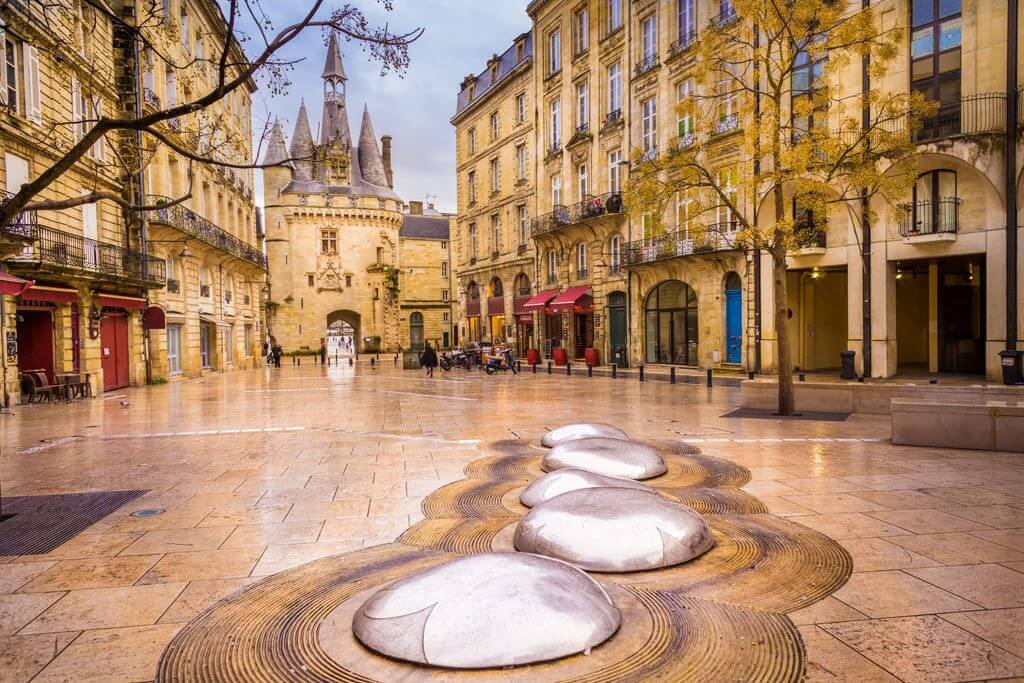
It’s almost impossible to get bored in Nouvelle-Aquitaine. Located in Western France, this is the French region of mountains and forests, prehistoric caves, beaches, medieval villages, and some of the most beautiful castles in France. The capital city of Nouvelle-Aquitaine is Bordeaux.
Its 720 kilometers of coast are a paradise for surfers, while people looking for a quiet vacation can enjoy no less than 30 spa towns, including Dax, France’s premier spa destination.
Nouvelle-Aquitaine is also a delight for foodies, with excellent wines and brandies and around twenty Michelin-starred restaurants.
Sun, history, dynamism, and gastronomy . . . there’s a perfect French getaway for everyone in Nouvelle Aquitaine!
Nouvelle-Aquitaine is divided into twelve departments: Charente (16), Charente-Maritime (17), Corrèze (19), Creuse (23), Dordogne (24), Gironde (33), Landes (40), Lot-et-Garonne (47), Pyrénées-Atlantiques (64), Deux-Sèvres (79), Vienne (86), and Haute-Vienne (87). The main cities in the region are Bordeaux, Limoges, and Poitiers.
- Best for: history, Mediterranean coast, hiking
- Best season: May to June, September
- Elisa’s pick: Albi, Cité de Carcassonne, and the Cathar Country
Traveling to Occitanie is like returning to the basics: the land, the sea, and the sky. Lesser-known than its chic neighbor, Occitanie in Southern France, is a fantastic region to explore, nestled between the Pyrénées and the Mediterranean Sea. The capital city of the Occitanie region is Toulouse.
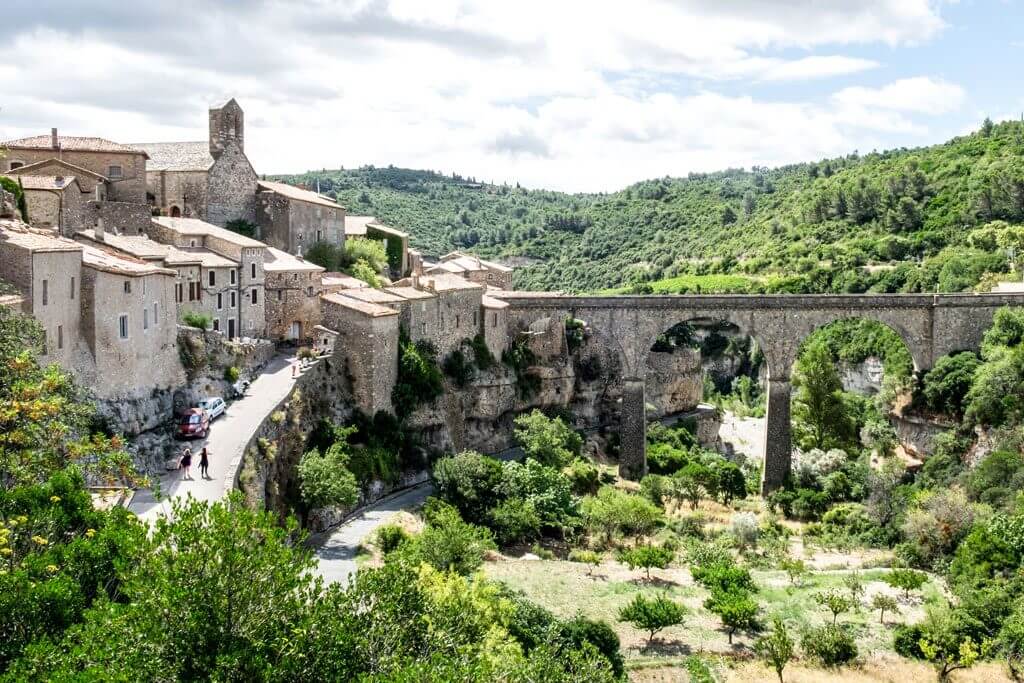
Less frenetic than Provence and the French Riviera but definitely more affordable, Occitanie is a land of sunny stone-built villages, vertiginous citadels, great mountain hikes, and fascinating history. A land where its inhabitants like to take their time and enjoy the small pleasures of this life.
Occitanie does not lack lively cities like Perpignan, Toulouse, and Montpellier. History buffs will want to head to Carcassonne, the gateway to the fascinating Cathar Country, Albi, and Rocamadour.
Occitanie is divided into thirteen departments: Ariège (09), Aude (11), Aveyron (12), Gard (30), Haute-Garonne (31), Gers (32), Hérault (34), Lot (46), Lozère (48), Hautes-Pyrénées (65), Pyrénées-Orientales (66), Tarn (81), Tarn-et-Garonne (82). The main cities in Occitanie are Toulouse, Montpellier, Nîmes, Perpignan, and Béziers.
- Best for: Atlantic coast, Châteaux de la Loire
- Best season: June to September
- Elisa’s pick: Les Machines de l’Ile in Nantes, and the history around Fontevraud Abbey
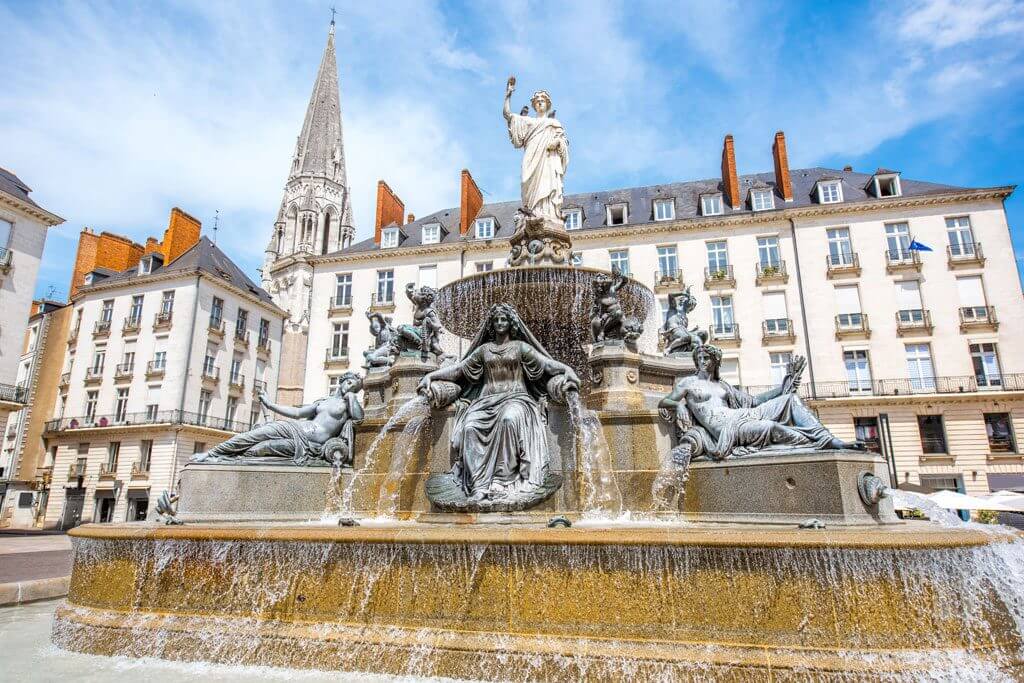
Located in Western France, Pays de la Loire is a region of châteaux and vineyards, with Nantes as its capital.
Pays de la Loire is lesser known than the neighboring region Centre-Val de Loire, and perhaps it lacks top tourist attractions, but this does not mean that it is not an interesting region to be explored. Crossed from east to west by the Loire River and bordered by the Atlantic Ocean, Pays de La Loire showcases a stunning coastline, charming towns and villages, varied natural landscapes, and cultural cities.
Nantes, the Dukes of Brittany’s historic capital, is packed with interesting things to see and do, followed by the historic cities of Angers and Le Mans. The latter is best known for its legendary racetrack and prestigious 24-hour race.
History buffs will love to visit Fontevraud Abbey, the final resting place for a line of monarchs, starting with Eleanor of Aquitaine, Henry II, and Richard the Lionheart. Children will have a blast at Puy du Fou, one of the country’s most-visited theme parks, with medieval and fantasy-style shows.
Pays de la Loire is divided into five departments: Loire-Atlantique (44), Maine-et-Loire (49), Mayenne (53), Sarthe (72), and Vendée (85). The main cities in the region are Nantes, Angers, Le Mans, and Saint-Nazaire.
Provence-Alpes-Côte d’Azur
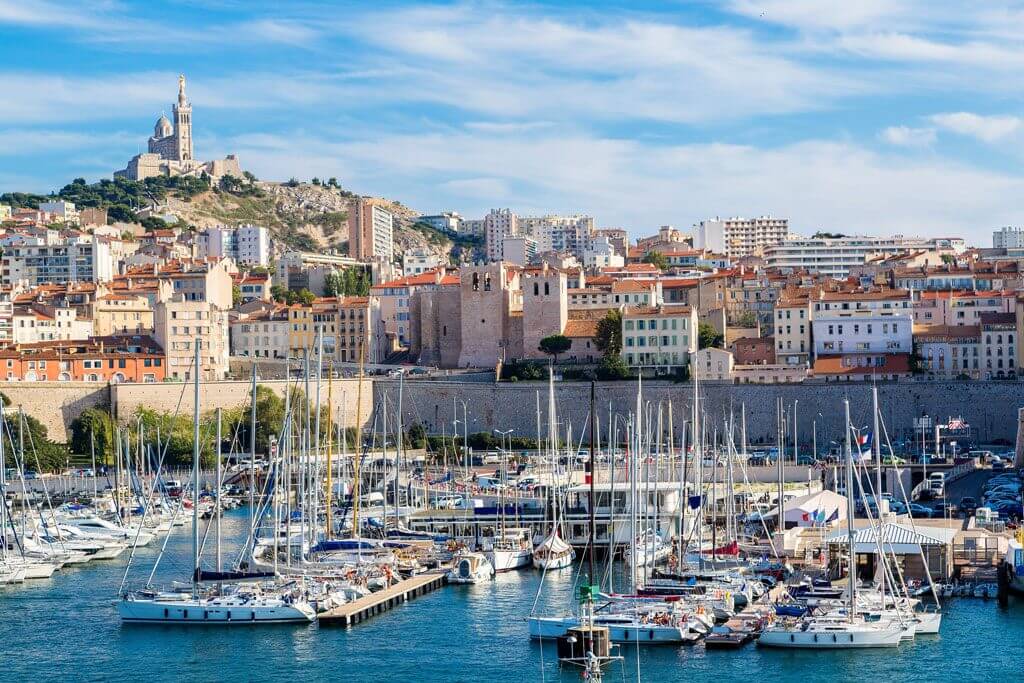
Explore Provence-Alpes-Côte d’Azur by Car:
- Best for: lavender, French Riviera, Roman heritage
- Best season: June to mid-August for lavender, May, June, and September for fewer crowds
- Elisa’s pick: the town of Cassis is my happy place. Marseille, the villages of Provence, Avignon, and the Calanques de Marseille-Cassis.
The region of Provence-Alpes-Côte d’Azur, in Southern France, has everything to make visitors happy: French Riviera’s sunny beaches and chic resorts, the endless lavender fields and stone villages of Provence, picturesque marinas, secluded creeks with turquoise waters, great hikes and skiing in the wintertime, and excellent gastronomy. The capital city of Provence-Alpes-Côte d’Azur is Marseille.
Bordering Monaco and Italy, cities like Nice and Cannes in Côte d’Azur are often the departure point of a French Riviera road trip or a stop on longer trips to Italy.
Provence-Alpes-Côte d’Azur (PACA between friends) is one of the best regions to visit in France. It gets hot and crowded in the summer, but it is an excellent travel destination in spring or fall when the crowds are gone and the temperatures are mild.
Provence-Alpes-Côte d’Azur is divided into six departments: Alpes-de-Haute-Provence (04), Hautes-Alpes (05), Alpes-Maritimes (06), Bouches-du-Rhône (13), Var (83), Vaucluse (84). The main cities in Provence-Alpes-Côte d’Azur are Marseille, Nice, Toulon, Avignon, and Aix-en-Provence.
Provence-Alpes-Côte d’Azur Tourist Attractions: Marseille, the Alpes Maritimes, French Riviera (St Tropez, Nice, Cannes, Antibes), villages of Provence, Aix-en-Provence, Avignon, Arles, and the Calanques de Marseille-Cassis.
So there you have it, a quick tour around the France region’s map and its top attractions. What are your favorite French regions?
Read more about the French Regions
Pin it now & read it later